Tuesday, July 10, 2018

A Morning of Water, and Afternoon of Art

From the Banyas to Tzefat.

The start off of this day must be stated with two words...FRENCH TOAST. Who could imagine that breakfast could get even better!! (Yup, it’s a running theme!)

We started our third day with Gershon ready to get wet. Our first stop: Banana Boating in the Kinneret (Sea of Galilee). It was barely 9 in the morning and already the day was warm and the water was gorgeous. My mom and Gershon took Asher on the speed boat, and the rest of us climbed aboard a banana boat built for eight. We loop-d-looped and jumped the waves and thought this was the ultimate fun, but we were wrong. We headed back into the docks and switched onto a giant round raft with a back wall. We each took our position and grabbed onto the hand grips on the seat. Off we flew. Okay, my perspective was a little different then the rest of the family’s because I seemed to be incapable of maintaining my seat. I kept bouncing around and losing my hand grips and laughing so hard I thought I might gag. It was AWESOME!!!!


Still grinning, we got back into the van and headed back toward the Golan where Gershon had it planned that we would do one of the area’s most famous hikes, the Banyas. Certain young people saw the parking lot, saw the hot terrain and got kinda prickly. After the Nahal Yehudia yesterday, they were not interested in lots of stairs or exertion. Hahahah.  So there were lots of stairs and it was a bit of work getting down, but wow.  The Banayas is an incredible waterfall in a crevice between mountains. It’s a fast flowing stream with gorgeous foliage all around. To stop people from hiking through the stream, the Israeli government built a beautiful sidewalk platform. By the time we really got into it, the bad moods had evaporated. Oh, and the walk back to the car was much less then the walk down to the beginning had been.


We were, as usual, running a bit behind. It was already mid-afternoon, and David and I had really been looking forward to going to Tzefat (Safed), so we stopped on the way and grabbed pizza in the car for all (ok, falafel for Elisheva and myself).

Tzefat is an incredibly unique city. It is considered the city that represents the element of air. The city is in the low mountains above the Kinneret (Sea of Galilee), right next to another famous place, Mount Meron, on which lies the tomb of Rabbi Shimon Bar Yochai. To get to Tzefat, one must drive up a winding switchback and the roads are incredibly narrow but still hold two way traffic.
In the middle ages, Tzefat became the home to a number of important (Kabbalists) Jewish mystics, most notablely Rabbi Yitzchak Luria, the Arizal. The synagogues there are beautiful, but unfortunately we didn’t get to as many of the holy sites as we would have liked. The kids were a bit tired and walking through Tzefat requires going up and down a lot of hills and stairs and it's all cobblestone, which is a bit tiring on one’s feet.

Ok, we took this one specifically for all my friends who went to Livnot!


The other significant fact of Tzefat is that in the modern era it has become the home of a huge Jewish artist colony. And David and I had arrived here with a mission. We wanted to buy a picture of Jerusalem to be the focal point of our dining room. We saw some beautiful paintings, but none of them were “just right.” However, a certain painting of Tzefat caught out attention and it turned out that the owner of the gallery was from Montreal and his niece is in Leah’s class.

When we finally got David through the artists colony (after the purchase of some beautiful challah covers), we had a brief tour of the city. We started (and probably spent too much time) at the Tzefat Candle Factory where they make beautiful candles and sell and incredibly wide range of braided havdallah candles. We began to make our way back through the colony to the car to figure out mincha (afternoon service) and dinner and getting Gershon to his bus. As we passed the first gallery we had entered, they called our attention. The gallery owners wife, his primary artist, had just brought over two pictures of the Western Wall that she had recently finished. Bingo! (So come visit to see.)

By the time the men finished the afternoon service it seemed silly to leave Tzefat without eating, We ended up having supper at a cute little restaurant called The Tree of Life, which was a healthy food restaurant. The kitchen was tiny and the staff consisted of the owner, who was cook and waitress, and her assistant. Tired but satisfied, we bid good bye to Gershon (who caught a bus back home, leaving us on our own until we would meet up with him again in Jerusalem on Sunday) and headed back to the Yavne’el Bed and Breakfast.

Titled: Honey, Do We Have Travellers Insurance?

And on the third morning in Yavne’el we feasted upon...Pancakes. :) I know, you are all totally booking your stay at the Yavne’el Bed and BREAKFAST

Today was our day for independence. We spent a lot of time discussing what we should do (ok, maybe arguing a bit) but we had a basic plan, which was to start with a hike recommended by our host, then head to Gamla and after a few other minor stops return to Yavne’el in time to visit with friends of ours from Montreal who had made Aliyah (moved to Israel) a year or so before and actually lived in Yavne’el.

The hike, known as the Majrasa, was actually not far from Nahal Yahudia, where we had hike the day before. This too was a water hike. We were all set to get wet, but alas we took a little too long to get to the start of the hike and soon the park was filled with a school trip.  Like Nahal Kibbutzim a few days earlier, this hike took us down a stream. There was far less swimming, and mom was wary of the fact that the floor was completely rocks. Large rocks, little rocks, rocking rocks...you get my point. There was also a lot more shade, which was good but also made the water and air cooler so there were points where you were actually cold. We had some issues with the school group ahead of us stopping and having water fights that made it impossible for anyone to pass, but eventually their teachers caught on that there were several families (not just us) waiting to pass. All in all, the family enjoyed the hike.


After finishing we headed north toward a place I saw on the map called Katzrin. Here archeologists had unearthed a village from the times of the Talmud and it had been turned into a recreation village tourist spot. I really wanted to go there, David wasn’t so sure, so we decided to have a picnic lunch (pita and hummus, you know) and decided. It also happened that they had a lovely picnic area just outside the gate of the Talmudic village with lots of tables and a roofed area to provide shade.
However, not far from the picnic area and adjacent to the visitors center was an aluminum door or ramp that sat full our in the hot afternoon sun. And this is where our day went very, very wrong. As we were eating and shmoozing and debating going in, Asher ran about like an almost two year old does, and like all toddlers, he tripped and fell...right onto the metal door. Ten seconds on the door equalled 2nd degree burns. 

I honestly don’t know who cried out and got my attention but in a flash David and I were hurrying him into the visitors center noticing first one hand blistering and peeling, and the arm, and the other hand and the knee! And the other knee. From my perspective, there were two may limbs to run under water. The man in the visitors center sent us into town (about two blocks) to a clinic. The kids were AMAZING helping my mom grab all thee stuff we had pulled from car for the picnic and staying out from underfoot but close enough to move swiftly. We got there only to discover that it was the wrong type of clinic, and, anyway, they were closing, but just over there (points to adjoining parking lot) is Magen David Adom (like Red Cross Ambulance Service). The Magen David Adom office was a tiny caravan, and we were reliant on my Hebrew (the best of the bunch) to communicate. Basically, though, they didn’t have the supplies to deal with the burns. We needed to go to a hospital, either in Tzevat or Tiberias (both towns needing us to go over long winding roads). While Tiberias was closer to where we were staying, Tzefat was closer to where we were. We piled into the van and hurried as fast as we could over narrow two land streets switchbacking up and down the area. There were two cars driving I front of us for what felt like forever and there was no room to pass. 

Finally we made it to Tzefat and Ziv Hospital, which has a separate pediatric emergency room that just so happened to have been almost completely empty. Hurray!

The staff at Ziv Hospital could not have been nicer. Unfortunately, they had to give him pain medicine and wait for it to go into effect before they could examine him. In fact, they had to dope out poor sweet baby up and he was pretty funny once those drugs kicked in. He also let the doctors and nurses examine all his burns. Initially they were concerned that part of it was actually third degree and they actually wanted to keep him overnight so that a plastic surgeon could look at him in the morning. In all honesty, my immediate attempts to dissuade them were purely selfish. I hated the idea of the trip being so disrupted for the kids! Eventually, however, they did decide that all the burns were second degree (although that one area would require a little more attention) and we could leave if we arranged to see a pediatrician the next day and perhaps a plastic surgeon on Friday. They shmeared him with Silversol, wrapped him like a mummy and sent us on our way after assurances that we would see a doctor to change the bandages the next day.

Elisheva was tremendously helpful in the emergency room.


I want to take a moment here to shout out. DAVID WAS AMAZING! Not only did he keep his calm as we drove down and up crazy roads getting to Tzefat, but he also dealt with all of the administrative details at the hospital and got on the phone with our travellers insurance. (On that note, however, I should point out that that very morning he had delayed our departure by double checking that our travellers insurance was in order. Stop counting chickens ....!!!!) In the upcoming days, he would also prove himself to be a master bandage changer.

I would also like to express my unending thanks to my mother for taking care of the most thankless part of this process, which was keeping the other kids from “dying of boredom” in the sparse waiting area.

Tired and a bit overwhelmed, we headed back to Yavne’el, grabbed a pizza and sat down to try to picture what the next day would bring, where we should go to get Asher’s burns looked at, as well as whether we should stay with the conventional medicine or visit one of the famous burn ladies in Israel and who are said to work miracles. Because of our unstable situation (changing locations), we ended up sticking to conventional. We were sad to have missed seeing Miriam and her family, but we were definitely ready for bed.

To the Coast, Where Crusaders Once Roamed

Our last morning at the Yavne’el Bed and Breakfast was just as wonderful as the previous few days had been, but given the situation with Asher we were a little less focussed on it. David and I were tremendously grateful that Asher had a decent night and seemed, over all, to be in good spirits.
While we had initially had a very different agenda for the day, our entire plan was now centered around Asher and fulfilling our promise to have his bandages changed by a medical professional. We ended up very lucky once again in that David had an Israeli friend whom he had met at a program at Harvard who had connections at the Rambam Hospital in Haifa. This friend made arrangements for Asher to be seen whenever we arrived and so we headed for the coast.

Before we left the Galilee, however, we had one quick detour. Just ten minutes from where we were staying was a Moshav (settlement) named Sharona. There was no way we were leaving the region without a picture of out awesome Leah Sharona in front of that sign.


Getting to the Rambam Hospital was not difficult. As we travelled, I tried to find suggestions for something mom could do with the kids while we took Asher to the hospital, but my mom had some reservations about getting lost and so we all went straight to the hospital. When we got there, we discovered that the pediatric center of the hospital had its own little science museum, so mom and the kids went there. Actually, they didn’t stay there long. As we later learned, the small café in the Children’s Centre was not to the liking of my children when they got hungry, they somehow managed to discover that in the food court under the main hospital there was a Kosher McDonalds, which is where we found them when Asher was done.

I don’t want to go into details, but I will say that the reception and treatment we received from the staff at Rambam was excellent. Asher’s injuries were examined, and the doctor seemed very confident that consistent bandage changing and making sure to keep it clear of infection (but let Asher be the toddler that he is) was the best course of action.

With Asher well-wrapped, we headed off to another “tourist” adventure. (Yes there are things to do in Haifa that we skipped. We did point out the beautiful Bahai Gardens to the kids as we drove by them.) Directly north of Haifa is the city of Acre, which, like Jaffa, was a historically important port until the newer, more modern city, overshadowed it. Acre was particularly important to the Crusaders. Now not only had several people recommended Acre to us, but my mom and I had strong memories of it as well. And I told my boys that this was a crusader thing and maybe they’d sell swords we could get ... you know, anything to make them excited.

Parking in Acre was yet another adventure. Waze led us to the Crusader Tunnels and we parked by the old ramparts. When we got out, several kids had to use the bathroom, and the only restroom we could find was at a house where a lady charged 5 shekels for public toilet usage. Some of the kids were outraged!

The Tunnels were not the thing I remembered, but they led to the thing I remembered, which was the citadel. Still, the tunnels were very cool. They were used by the Crusaders to get to and from the port, even when under-siege. As we got to the end of the tunnels (farther from the port) the tunnels got shorter and shorter, so that David (wearing Asher on his back) had to bend down a bit.

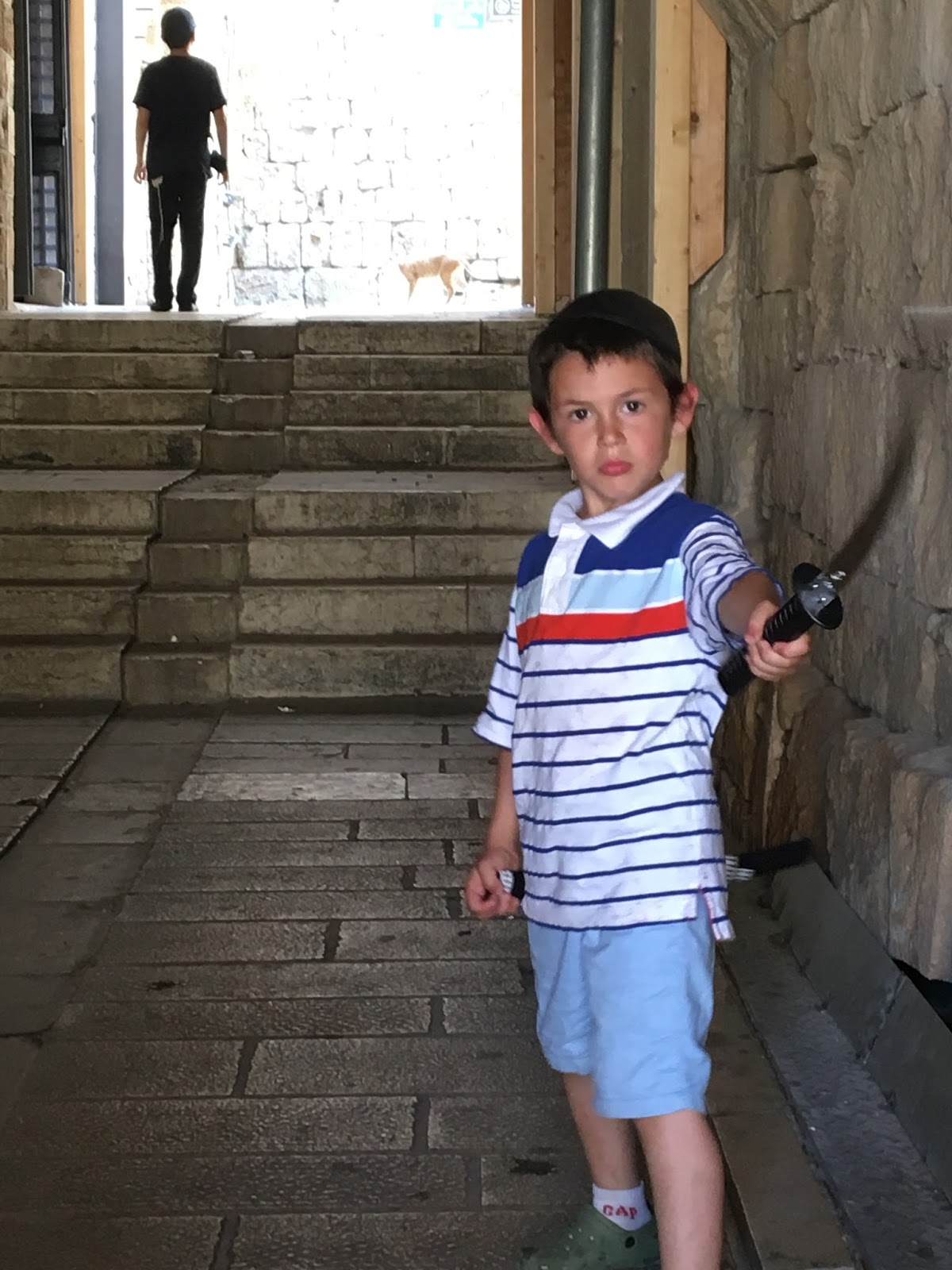
The tunnels let out into the old city of Acre. Actually, the exit was directly opposite a shop selling ice cream and candy and drinks...and swords. We got Yaakov a cheap sword, as well as refreshments for everyone before following the very long trail through the city to the Citadel. Unfortunately, we got lost on the way there, and that would later effect us in cutting our time at the very cool fortress.


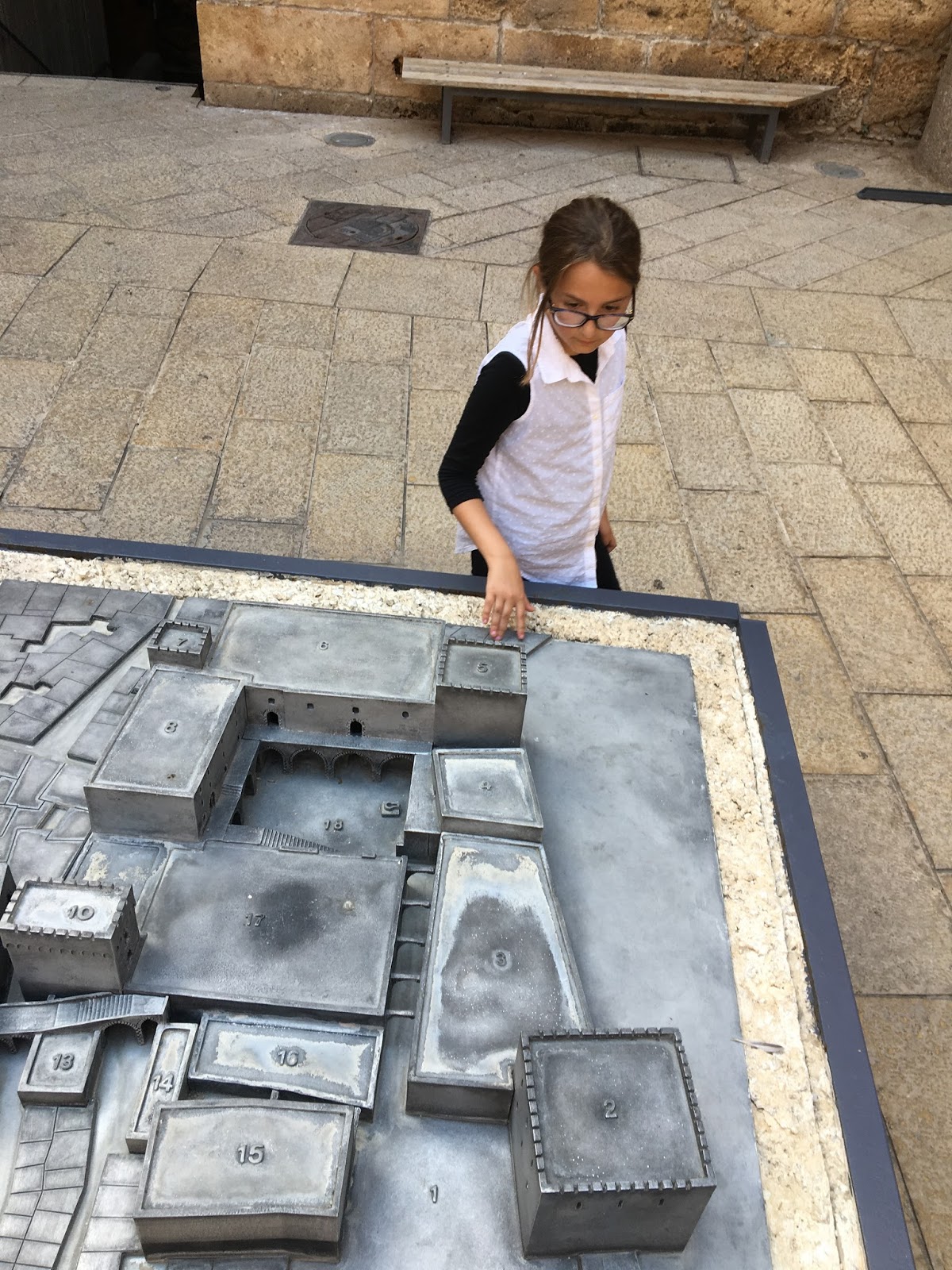
The Citadel (where upon paying the entry fee David also purchased one bathroom pass! for each of us) was not as I remembered it. I remember entering a nearly intact excavation of a Crusader fortress. I guess the tourism ministry also thought it was cool, as they seem to have developed it quite a bit.  Far more of it seems to have been opened up, but I could be remembering wrong. For certain, though, it was more set up for tourists. (Actually, I just looked it up online and I am not wrong. It seems there were structural issues and so there was a massive preservation and reconstruction project in the 1990s, not long after my last visit to this sight, which would have been my BBYO tour in 1990. http://www.akko.org.il/en/Old-Acre-About-Conservation-Fortress-Project)

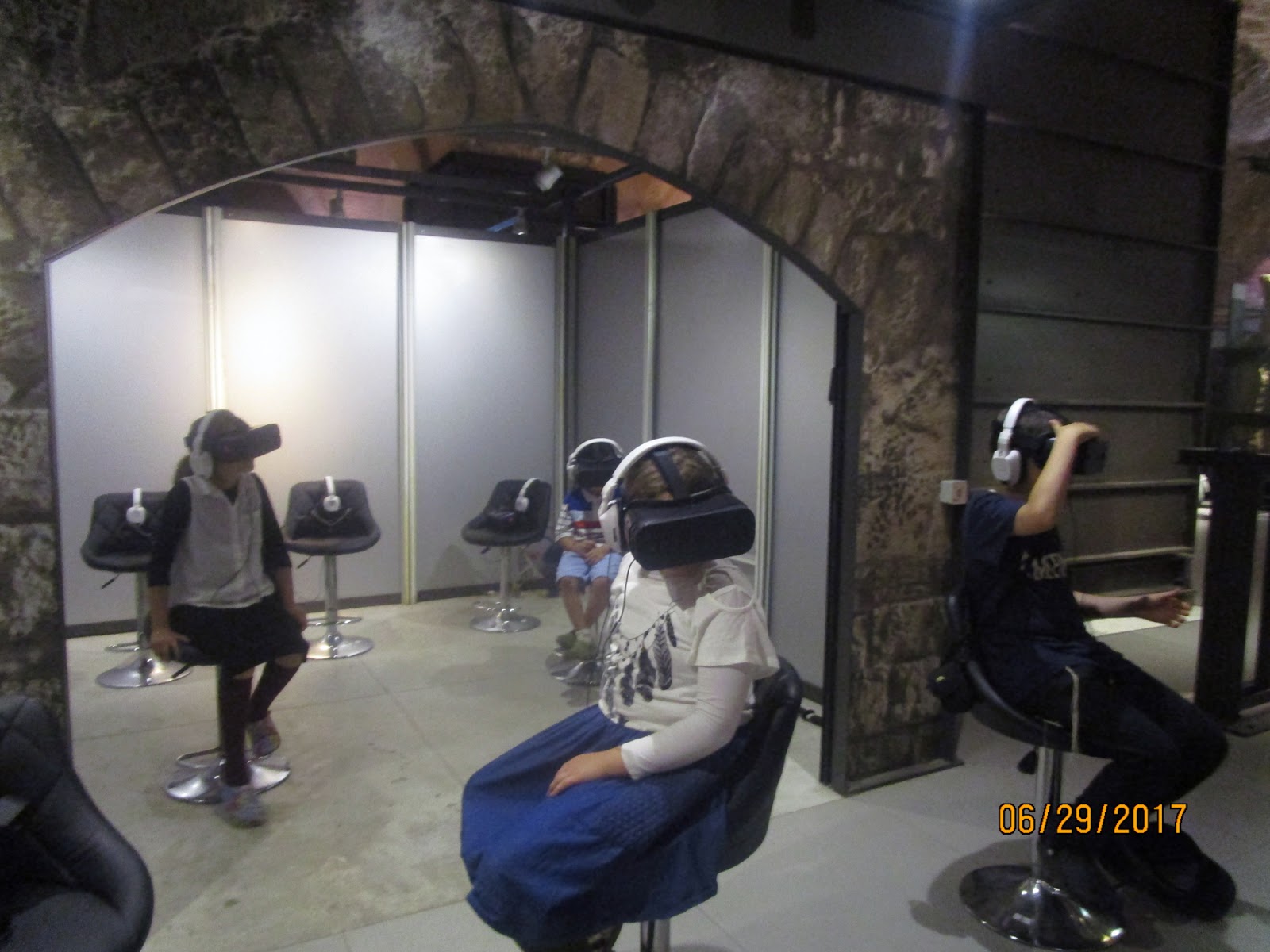
Anyway, the Citadel, which was the Fortress of the Knights Hospitaller, has soaring, arched ceilings and is really quite incredible. There were tourist boards explaining the history of the city and the history of the Crusaders reign in the Holyland. In one of the main rooms, the ministry had set up an area to mimic a market, with spread out stalls where people sold artisan where that represented the types of artisanship of that era. (Not quite a recreation type situation). One of these stalls belonged to a group presenting a Virtual Reality Experience of Acre. Now I can’t tell you what it was because we only paid for the four big kids to do it, but they were wowed and astounded and said it was incredible.


Alas, not long after that we looked at the time and realized that we were due in Tel Aviv to meet up with David’s friend from Harvard. We still had to trek back through Acre and back through the tunnels to get van, so we hustled along. As interesting as the new displays were, I have to be honest and say it was not the same experience I remember, when you felt more like you were in ruins than reconstruction.

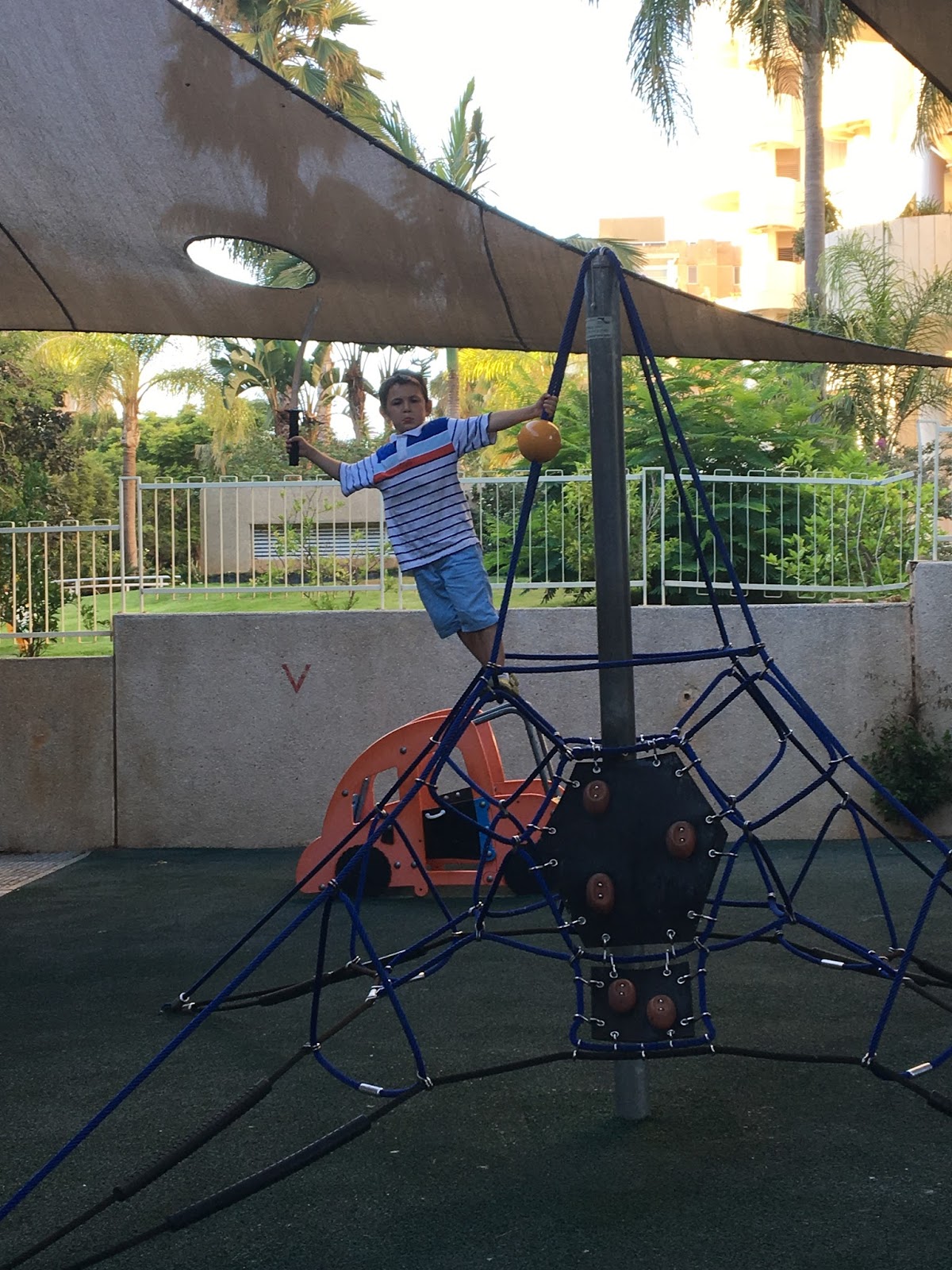
David’s friend, Asaf, lives in northern Tel Aviv. If there is one thing that Tel Aviv makes you think about, it’s the housing pressure in Israel. The area was mostly comprised of soaring apartment complexes, and this was one of the more desirable neighborhoods of the city. (If you can, tell, I am not a city person.) For being so crowded, I must compliment the city, and Israel in general, for including a wonderful number of playgrounds in the areas that we saw. Also, most of these playgrounds had built in shades to keep them out of the intense sun. We hung out at one such playground so the kids (ours and theirs) could run around and it was a lovely visit.


Not wanting to be caught in Tel Aviv for Mincha and Maariv (afternoon and evening services) and then having to get to our next Airbnb in Jerusalem, we left Tel Aviv with the hope of making it to Modiim, about 20 minutes outside of Jerusalem, where we were certain we could find a minyan for Mincha. Alas, what we did not account for was the massive amount of traffic! We had to pull over for David and Avi to do Mincha on time and then we “crawled” toward Jerusalem.
It was dark as we pulled into the city, which was disappointing for me because I had hoped for the kids to have that dynamic first impression of this holy city. Even though it night, both David and I could immediately see that this was not the same city we had last set foot in (separately) 16 or so years ago. There was a really cool bridge with colors dancing upon its wires.

Our new Airbnb location was located in the heart of the city, in a neighorhood known as Rechavia. To get there, we crawled along Agrippas Street, passed the Machane Yehuda Shuk (outdoor-ish market), and we were all enthralled by the throngs of people out. There was definitely a unique atmosphere of a city preparing for Shabbat.

Narkiss 6, the apartment we rented, was up a small street off a small street and we were, in all honesty, lucky to actually find it as it had no number on it. I volunteered to get out of the car and “check it out,” with many rallying cheers (and sneers) about the Ophir Hotel coming from behind me. I let myself in and was delighted to discover that we had hit gold once again. The apartment was amazing: high ceilings, enough beds, fully stocked. The family was greatly pleased. We brought out stuff in, discovered a location for Maariv and crashed not long thereafter.

Goooood Morning Jerusalem!!!

Friday June 30
Getting started was a little less speedy then I had hoped. David successfully got Avi up and out for minyan, but when they got back the rest of the household was still in a bit of slow-motion. David very quickly discovered that the Narkiss building in which we were staying was practically attached to a tiny coffee café owned and operated by a cute young family. You can guess where we had breakfast.

Breakfast over, it was time to organize ourselves to head to the shuk to buy our Shabbas needs. First we desperately needed to get money - which was almost funny since, in Israel, Friday is like Sunday and the banks are closed. We went first to Bank Hapoalim and found that there, as in almost all the other places we had gone, our cards were not accepted. We went to the money changer across the street. He didn’t take cards, but sent us to Bank Leumi stating that when people come to him frustrated after Bank Hapoalim, he sends them to Leumi and never sees them again. He was right. Hodu l’Hashem! I had been getting quite anxious about our lack of funds.

Cash in hand, we were ready for the shuk. This was an activity that both David and I had been looking forward to, but our mission was daunted by two aspects. 1) um, we got lost. All the streets here wind around and around and it took us far longer to get there than we had hoped. 2) Having gotten a later start than we had expected, the shuk was incredibly crowded.

Our first stop at the shuk was Marzipan, the famous bakery, followed by a giant candy stall where David spoiled the children. It was crowded, but that’s really part of the experience.


We bought produce and spices and pastries. We stopped for lunch in a tiny stall that sold malawacha. David and Avi shared a malawach toast with chumas and spices, Leah and Yaakov shared a malawach pizza, and Elisheva and I shares shakshukalawach, which was shakshuka on a malawach.  By the time we left the shuk (with several less-than-patient children), it was close to 2 pm, and we didn’t actually have food for Shabbat.


The shuk experience of 2017 was...weird. It felt so much less authentic, although there were still plenty of merchants “hawking” their wares, there were far more “boutique” shops mimicking Shuk stores. Theses included quite a few bars and restaurants (like the melawach place).

On our way back to Narkiss Street, we passed a toy store and purchased some entertainment (a glider bike for Asher, soldiers for Yaakov) to keep the younger kids busy on Shabbat. David and Leah headed to a store David had discovered the night before and they purchased our actual Shabbat seuda.
SHABBAT (Happy Birthday David)

David and Avi had thought to go to the Kotel (Western Wall) for Friday night services, but in the end it proved too complicated. The guys davened locally and met Leah, Yaakov, Asher and myself on the way to a little playground down a windy hill. As we got there, Avi jumped the gate into the park and was rewarded for his enthusiasm with greetings from the four dogs who were already there (only one was of any size). He freaked out, ran this way, then that way as I was shouting “Just stand still,” and David was trying to help him out and the dog owners were trying to calm the dogs. He got out but it was a bit terrifying. David and I explained to him that when dogs see you run they get excited and just stand still.

It had been a wee bit challenging getting ready for Shabbat in a somewhat kosher (there is kosher equipment) kitchen that you haven’t been in for even 24 hours. Nevertheless, we made a lovely little seudah meal. (Okay, the soup was vegetables spiced with the zatar mix that David had purchased at the spice shop and there was no salad or desert, but everyone was very satisfied.)

On Shabbat morning, David, Avi and Elisheva got up super early and headed to the Kotel. I didn’t expect to see them until close to noon, but they actually got back around 10, just as mom and I were leaving the apartment to take the kids to the playground. David and Avi went to the Gra Shul to learn, Shevi went to bed, and we went to the playground. No one wanted lunch THAT early.

Shabbat day was rather long, and the children grew restless. At 7 pm (ok, 7:10, since changing Asher’s bandages took longer than we expected.) We headed, altogether, to the Kotel. The weather was lovely - a nice, gentle breeze - and the walk was really quite pleasant. Even though David had given Avi and Shevi a bit of a tour that morning, we discussed things we were seeing. For David and I, it was a bit weird. There were quite a few bar/bistros open on Shabbat, which either was a more recent development or was just something I had been oblivious to in the past. For me, the whole walk was tinged with memories. As we got to the Rova (the center of the Jewish quarter), we told David and Avi to hurry ahead in order not to miss a minyan for Maariv). This, however, left me with getting the stroller down the many stairs that lead to the Kotel plaza. It took awhile.

How do I discuss being by the Kotel, the Western Wall, the Wailing Wall (if you don’t know about it, read this LINK). Walking down the stairs is breathtaking. I felt as if I had never left and as if I had been away forever. More significantly, it was a very different feeling being there as a mother, with my kids, and hoping that they were feeling a spark and were understanding, on some level, the significance of where we stood.

As a group we found a spot among the women at the Kotel. It was, as it always is, startling and beautiful to see the incredible diversity of the people there. Each of us went up to the Kotel, and said whatever it was we felt appropriate to say. I davened Maariv and we found the men and were ready to head home. Our plan was to grab two taxis, which we accomplished. Mine (with Asher, mom and Yaakov) cost 50 shekels. David’s taxi driver “bargained” him down to 90!

With Shabbat over and the kids heading to bed, David and I took advantage of having my mother with us. We went for a walk to Ben Yehuda St, which happens to be incredibly close to the apartment we rented. David was yearning for a burger; I was not particularly hungry but wanted ice cream. Before heading to eat, we wandered the street like a luxurious stroll down memory lane. Some places never change, and in its essence, Ben Yehuda is like that. It is a “pedestrian mall” that is the ultimate hang-out. It is the essence, in my opinion, of Anglo-Israeli culture. I’m pretty sure I heard far more English than Hebrew being spoken. We rediscovered Timol Shilshon, a charming bookstore café tucked away down seemingly random alley off of an offshoot of Ben Yehuda. It is pretty close to the same, although it has a little bit stronger of a restaurant feel than it used to. Many familiar places were still there, but others had gone or changed. The Underground (a club), which was a landmark for both of us not so much because we had, either of us, hung out there but because we had been here at an age when our peers did, had moved and perhaps died. The large hotel bordering the center square, which David and I both remember having a run down feel with a dark parking lot underneath, was completely renovated and active. (I have my suspicions that removing the Underground was part of the agreement for reinvigorating the hotel.)

On our way to Café Rimon to get David his burger (and me fries...ended up to tired for ice cream!) at Café Rimon, we ran into The Franklins from home. I had known they were coming, but it felt nice to be surprised by a familiar face.


Ancient Jerusalem

We were back with Gershon today, and he asked us to impeach him from “Mr. President” status.
Our day started at Ammunition Hill. This was Gershon’s choice as he felt it was important for the kids to understand what holding Jerusalem meant and what people were willing to sacrifice to make it ours. There was an excellent, recently-produced video featuring men who survived the Battle of Ammunition Hill discussing what had occurred with their grandchildren. (I was particularly moved that they included in the video the grandchildren of a man who did NOT survive the battle.) The video was projected onto a platform below which was a topographical sculpture map of Jerusalem and the hills surrounding the city as it all stood at the outbreak of the Six Day War. With incredibly cool lighting effects, the map-sculpture was used in conjunction with the map to give one a true sense of the retaking of Jerusalem.


Ammunition Hill, which is not far from Mount Scopus (Har Hatzophim) where Hebrew University is located, was held by the Jordanians following the 1948 armistice. Because of its strategic position, the Jordanians prepared the hill in case of an Israeli attack. They built and fortified a series of trenches, making it incredibly difficult to overtake. Following the film, we walked through the trenches while Gershon gave us an even more position oriented sense of the battle.


Leaving Ammunition Hill, we parked the car at the Mamilla Mall and made our way to Jaffa Gate. Probably the most heavily used gate of the Old City, it is part of the impressive wall that now surrounds the Old City and which was built under orders from Sulemein the Magnificent. While Gershon spoke about the features of the walls, the actions of the Jordanians between 1948 ad 1967, and the history of the city outside the walls, we made our way slowly to the stairs leading up to the Ramparts.

Walking the ramparts of the Old City of Jerusalem (We crossed from the West Wall and onto the Southern Wall, I believe.), is breathtaking. Doing so with a toddler is chaotic. As we walked, Gershon brought history to life, and helpfully carried Asher up some of the steeper stairs. The walk itself was tiring because we were in the direct sun and there were numerous towers to pass over-around-and-down.


The Ramparts walk ended near Har Tzion (Mt. Zion) and the Zion Gate, which put us right next to the Tomb of David. My memories of this place, probably from my first trip to Israel when I was 11, was of a much smaller and less decorated place, but when I asked I was told my memory was wrong. It was a beautiful room with a wood mechitzah (divider) decorated with bronze placards of some of the shorter Psalms.


It was now close to 1 and hunger was overtaking the kid’s so we aimed for the Rova, the center of the Jewish Quarter of the Old City, where there are many lunch spots. Pizza and falafel for most, shwarma for Shevi.

As we entered the Rova, I stopped in awe. Across from the path we were on stood the Hurva Synagogue. Originally built in the 18th century and then rebuilt in the 19th century, the synagogue was deliberately destroyed by the Arab legion when they held the city after 1948. When the Jews retook Jerusalem in 1967, all that remained was an arch, a striking reminder of what had once stood there. In the years since either of us were last in Israel, however, the Hurva was rebuild based on pre-1948 photographs and just walking past it was incredible.


After lunch we went to go see the remains of Chezkiahu’s (Hezekiah) Wall, which he built to keep out the Sancherib and the Assyrians. Unfortunately, some municipal worker thought it was a good idea to place a giant inflatable Moon over the ruins as part of the week long Jerusalem light show.
Disappointed, we continued to walk through the Jewish Quarter and made our way to the Cardo, the ancient Roman market road that was unearthed beneath the Jewish Quarter. It’s now rather commercial, but also has “windows” down to more remains of Chezkiyahu’s Wall.


Next Gershon led us to a shul that connects to the Kotel area. We went down to the Wall and from there we went out of the Old City through the Dung Gate, which is the gate near the Western Wall. We were on to our final destination...the City of David, Eir David.


We started this part of the tour with a 3D movie about the history of the valley, how the Jebusites settled it and what David saw when he conquered it. The 3d was cool, the air conditioned theatre even cooler.

As we climbed to the roof for a view and pointing out where things were session, my mom decided she had had enough. Up the stairs and down the stairs under a roasting sun...so she went back the plaza. We passed her on our way down to walk through the tunnel that Chezkiyahu built to ensure there would be water if the Assyrians besieged Jerusalem.

Getting to the tunnel was quite a few steps, and I have to admit that by this point I was a bit shakey from a full day in the heat. Finally we got to the entrance. The first few feet of the tunnel has rushing water, and it’s quite cold. David held Asher in his arms since we did not want his bandages to get wet.  As we entered the single file tunnel, Yaakov started panicking and asking to go back.  Sorry kiddo, no u-turns.  Once past the fast water, the spring got deep ... meaning up to my thighs but it quickly leveled out to just above the ankles and remained there for the duration of the tunnel, which was far longer than we expected.


This was no walk for anyone with clausterphobia or who is very large. I only had to duck a few times but I felt bad for David who was carrying Asher in his arms. To make things just a smidge more challenging, the group two ahead of us went really slowly and created a traffic jam. The walk was pleasant but long. David, however, said that the whole time he kept thinking about Gershon mentioning a few days earlier that Israel was probably due for an earthquake.

Out of the tunnel, we heard a little more about the excavations and the history of the site, both ancient and modern. However we were quite tired so we took a shuttle back to the beginning, got my mom and took a bus to where we had parked the car.

We returned home exhausted but was quite satisfied by the day. Next however I needed to fulfill my promise of ice cream to the kids. Asher was asleep. Mom and David were too tired. So I took the four big kids to Ben Yehuda Street where we found gelato (Italian style ice cream) and they even had pareve for Shevi, since she had eaten shwarma earlier.

Through the Books of the Prophets, or a Journey in the Shomron

July 3: We started the second day of our Jerusalem-based touring with an early start. OK, to be honest, we started every day early, and every day the kids grumped getting out of bed, but we generally made it out at a decent hour.

Our goal today was to give the children a sense of Israel via the areas connected to the stories of the prophets, and our first stop was the Kever of Shmuel Hanavi (Tomb of Samuel the Prophet). I guess what was most interesting to me as we started out was that our itinerary for the day included so many places that I had never visited. I hadn’t expected that. For example, this site was only designated as a national park in the 1990s.

Nabi Samwil, as the location is referred to in Arabic, is said to be the burial site of Samuel the Prophet, the man who anointed both Saul and David as king of Israel. The thing with all of these burial locations, however, is that there is no solid proof, merely oral traditions maintained through time and also passed between reigning cultures. Holy sites tend to remain holy, so thus it was that the grand building at the site was built as a mosque but also has a church attached, as well as a synagogue.

To get to the mosque/church/synagogue, one first walks over a bridge over the current extensive excavations, which have revealed a number of layers of settlement surrounding the tomb. The main building itself is quite impressive, even as it is extremely simple. We entered and I was immediately in awe of both the incredibly high ceiling and the amazing difference in temperature. Where outside was I-want-to-faint-hot (and remember, this was still the morning!) inside was very pleasant.  Speaking of the high ceiling, Gershon next invited us up a narrow, stone staircase so he could present the tour from a proper elevation. It was breathtaking, of course, and we were able to see the strategic value of this mountain that made it historically significant. Gershon pointed out the sites of the Gibeonite territory and how close it was to Jerusalem, and he showed us the location of the battles of the Maccabees.


Alas, the roof of the mosque was turretted, and the boys found the domed slopes of the turrets too inviting to ignore, so I spent most of the roof-top tour slowing people down from being wild. After we descended from the roof, we headed to the synagogue. We took the opportunity to recite Tehillim (Psalms).


Following Nabi Samwil, we headed to the Shamron, frequently translated at Samaria. On our way, we stopped for Gershon to point out the location believed to be the palace of King Saul. The site is particularly easy to point out, even from a distance, because it is on top of a hill and there is now the large skeleton of a building that is hard to miss. This framework is the beginning of a royal palace that King Hussein of Jordan began to build in 1964. In 1967, the Six Day War interrupted the project and now only the metal outline of the building remains.

I feel that for anyone unfamiliar with the situation, I should mention that the areas we entered today were all in what is known as the West Bank, the land reclaimed in the Six Day War. While politicians talk about the ownership in land, there is no question that the area is rife with Jewish antiquities!

The next feature of our tour was, again, not a real stop, but rather a narrative of the place we were passing. Gershon pointed out that this was the location of the story of Elisha and the Bears (see II Kings 2:23-25). What struck me was the fact that I only picture bears in woods, and there hills were not particularly woodsy. But, then again, after thousands of years of people passing through and conquering armies marching forth, it is not surprising that the terrain is greatly changed.
We were headed to Beit El, but we detoured first to visit the Psigaot winery. I’ll have to have one of the kids submit a description of this stop because Asher was fast asleep in the car, so I stayed with him.


I had last been in Beit El in the 1990s when I knew a few people who lived out here. I remembered it as a settlement – meaning that, while there were a few houses, many of the people lived in caravans (temporary homes). It was now a very large town with numerous neighborhoods. But we didn’t stop in the town. Rather we headed just north of it to a fascinating archeology area that is now believed to be the site of both Jacob’s dream (Genesis 28) and one of the temples with golden calves built by Jeroboam (I Kings 12). The site is incredibly rocky and dry. As at most such historical spots, there were the remains of a small mosque that had once serve as a Crusader church. Holy sites in Israel remain holy throughout history! Another fascinating feature of this site was an oak tree that was a thousand years old. It was cooly gnarly!


These types of archeological sites often require a tremendous amount of visualization. Often times it is a matter of accepting the guides explanation of what archeologists see, and Gershon spent time explaining why and how this spot was identified by archeologists. Particularly he explained where and why King Jeroboam, the first king of the Northern Kingdom of Israel erected a temple here in order to distract pilgrims from heading to Jerusalem and the Temple in the Kingdom of Judea. I believe there are midrashim that say that Jeroboam chose the site because it was the site of Jacob’s dream.


After exploring the rocky terrain and taking some silly pictures of our own Yaakov (Jacob) with rocks under his head as pillows, and with the children getting rather peckish, we continued our tour. We stopped on the way to pick up pita, hummas, and other exciting food (This time we also grabbed salami for the kids) so that we could start our trip to Shilo with a picnic lunch.

Once again, we arrived at an important Biblical site to which I had never been. I actually looked it up to understand that it had also not been open to tourists until well into the 1990s.

Our very cool tour of Shilo started out with a picnic. Although the lovely visitors center and gift shop had wonderful air conditioning, it was a bit crowded with us inside and there was too much stuff to draw a toddler’s attention. Behind the tourist center was a truly lovely picnic area, which included a neat pond (that had plants whose roots acted as a water filter) and several hammocks in addition to a plethora of picnic tables and shade.  Around the picnic area there were small archeological excavations as well as some booths (not in use at the moment) for when Shilo opens up for re-creation tours to show how people lived in Biblical days.


After a very long lunch, we headed toward the archeological park

The kids were a little bit tired of the intense heat and the heavy walking, so they were a bit whiney even after their lunch, but I was really excited. We headed through an excavated village site that is more interesting/entertaining when there is a program running. Our destination was a building with a multi screen presentation. (The ramp up was aluminum metal and Asher definitely hesitated to go near it. Poor baby.)


The presentation at Shilo was excellent, presenting a somewhat reenacted overview of the role of Shilo in Jewish history. The presentation talked about the Mishkan (Tabernacle), Elkana and Chana, King Saul and the story of the war with the tribe of Benjamin. After the video, although we didn’t go down because the party was really just over-tired, we could see where they were excavating what they believed was the site of the Tabernacle. I found it very impressive.


It was late afternoon so we headed back toward Jerusalem, stopping only to drop Gershon off at a place from which he could easily get home. Dinner was an in-house, simple affair and we all made an early night of it.

For those who are wondering how Asher was fairing, I should add that each day included a 45 minute session of changing Asher’s bandages. This was accomplished by sitting him on the counter near the sink, taking out one of our electronic devises and distracting him with a great set of videos called Truck Tunes ( I believe) that are all these songs about different types of trucks. I had found this site before Israel by googling monster trucks and the first song they have was all about Monster Trucks. We love these videos.  The first few times we used the videos to calm him own, but by day four or five it was just part of the routine. We rinsed the burns I cool water, dabbed them with clean cloths applied creams and applied new bandages. David was unbelievably good at this process.


Jerusalem On Our Own

Tuesday, July 4th
We planned this day to be a little more low key...just us, no tour guide. To be honest, however, Gershon did help us by making reservations for us for the tunnel tours and the virtual reality Beis Hamikdash (Temple). Alas for my kids, the reservations were pretty early in the day so it was another morning of "rise and shine" and "up and at 'em." We actually decided that the best course of action would be shacharis (morning prayers) at the Kotel. My mom stayed with Asher in the Rova rather than shlepping the stroller down the stairs just yet and when I finished davening, well before the men, I ran back up the steps and we ordered bagels for everyone. By the time we got back down to the Kotel plaza, we were already running tight on time.

Replica of the Menorah from the Holy Temple


How does one explain the Kotel Tunnel Tours... The Western Wall (the Kotel) is a familiar view to people, but archeologists have been excavating the wall for years. The Tunnel Tours take you beneath the city and up against the unexposed stones of the wall. Some of these stones are just massive! First, however, a trained tour guide provides a fascinating history of the mountain on which the Temple was built and how the Temple evolved so one gets a better understanding of what we are about to see.


One spot, which generally has a contingent of people there for davening, is the closest one can physically get today to where the Holy of Holies part of the Temple was. Additionally, the excavations also take you "out" onto an ancient roadway where you can see pillars and windows from a time long gone, technically, for a good part of the tour, you are under the Arab quarter and the tour's exit used to be in that section as well.


Unfortunately, I can't tell you where it ends this time because our two tours ended up scheduled to closely together and we had to cut out early to make the 4D Temple tour.

While the kids had done virtual reality in Acre, we adults had not. The 4D required us the put on these goggle and headphones, blocking our senses of the world around us....which would have been no problemo if we hadn't forgotten to take Asher into consideration! So if all seven big people are immerse in VR, whose watching the wide awake toddler? I asked if we could stagger our time, but there was a larger group scheduled right after us. In the end, it worked, David kept a hand on him, and I partially removed my headphones so I could hear if he needed me.

The Virtual Reality Temple Tour was really cool. When it started you found yourself in the courtyard of the Temple. Wherever you turned your head or body, it was like you were really turning. In fact, it was a little trippy that if you turned to look at your hand, there was no hand, just part of the scene, like the floor or something. The animation was excellent and the tour took you through the main areas of the Temple that was built by Herod. It gave you a real sense of perspective.  Like how tall a pillar was and how long the courtyard was.

Having spent our morning in the Old City, we headed back to the apartment to park the car and take advantage of a free afternoon for some shopping time. The girls had been hoping to go look for clothing in the Geulah area and the guys wanted to go to Meah Shearim for some Judaica stuff. I'm going to leave out the details of our shopping expedition, but I can say that Avi found a Yad, a pointer for someone reading Torah In shul - something for which he appears to have a great talent - and we ladies came home satisfied (is there such a thing as too many scarves?)